Blog Post
A caregiver’s story · Marriage, multiple sclerosis & devotion
Bruce Makous has loved the same woman for 45 years. For more than half of them, he’s been her caregiver. This is an excerpt from his upcoming memoir.
I enter the bedroom with the tray table and coffee. I open the blinds. Bobbie’s already awake.
In her tentative voice, almost a whisper these days, she says, “Be still, my heart. It’s my husband.” It’s her usual morning greeting. Our cat Luther jumps onto the bed.
“And he brought his dog,” she adds, because I always say, “The best dog I ever had was a cat named Luther.” He follows at my heels everywhere I go.
She seems alert, in a good mood. “Is today Monday?” she asks in her near-whisper.
“No, Sweetheart. It’s Friday.”
She puzzles through this idea, not convinced.
Barbara, our home aide, comes in and gives morning greetings, then takes Bobbie’s vitals. As the blood pressure sleeve fills up, Bobbie wonders aloud, “Why do I have to do this every day?”
“We have to keep track,” Barbara says. I consider making the joke that used to get at least a giggle: “And we post it on the BobbieWatch website so everyone can follow along.” But when I said that last week, Bobbie looked confused, and Barbara corrected me. “Don’t tell her that. She believes you.”
“Your blood pressure is good today,” I say instead.
Over the next hour, we get Bobbie up, toileted, dressed, fed, and into her power wheelchair. Soon, she’s sitting in front of the TV, tray table in front of her with a cup of coffee and the Poughkeepsie Journal. In her faltering voice, she asks again, “What day is it? Monday?”
“No, Sweetheart. It’s Friday.” There was a time when I would have added, “All day,” or something like that. Now that’s harsh, like teasing a child. Instead, I make a heart shape with my hands and mouth the words, “I love you.”
She lifts both hands and holds them out, unsteady. She can shape her right hand into the correct half-heart shape. Her left hand is weak from a stroke and permanently set in a fist, so her heart-shape is lopsided.
She keeps trying. Then she looks toward me, her eyes downcast, so disappointed that her heart-shape isn’t right.
I feel like crying.
She starts paging through the Poughkeepsie Journal. She has always preferred hard copy over digital, and one of the sections she checks every day is the Obituary page. Today, she is studying the listings of recently deceased, looking at them very closely.
“We don’t know a lot of people from this area,” I remind her. We retired to the Hudson Valley only a few years earlier. “So you probably don’t know any of those names.”
“I’m just making sure I’m not listed.”
No hint of irony, but I convince myself she’s kidding and laugh out loud. “You’re pretty funny.”
She doesn’t laugh, or even look up. She’s not kidding.
A little later, her laptop is in front of her. On the screen is a memoir entry she wrote years ago. She’s trying to edit it.
She says, “Bruce, where’s that thing like a pause?” She makes a sloping gesture with her good hand.
“A parenthesis?” She nods slightly, a shivering rabbit, unsure. I show her the open parenthesis key and how to press the Shift key with it. She enters it, satisfied. But then she stares at the screen, struggling to regain her train of thought.
I easily remember the confident, funny person who wrote the original entry. She wrote innumerable other memoir entries. She wrote professional articles. She wrote teaching curricula. This difference today, this loss, is hard to believe.
It’s the millionth time I’ve felt loss. But with MS, loss can come every day. And every loss is new, and newly heartbreaking.
That’s my life. In the 45 years of our relationship, I’ve been Bobbie’s caregiver for more than half of that time.
I didn’t set out to be a spousal caregiver. No one does.
When I was young, I wasn’t a caring person at all. I even had an opportunity to make a life in care, as a doctor. I rejected that path, went in a different direction.
I had a comfortable childhood, raised by medically trained parents — my father a successful cardiologist, my mother a former nurse who used her skills to raise ten children. We lived in a large house on Philadelphia’s Main Line, a very upscale area. I went to a private college prep school. By the time I was heading off to Oberlin College, enrolled in the pre-med program, I thought I was prepared to follow in my father’s professional footsteps.
But I abandoned my pre-med program. I was a tangle of confused ambitions. A career in medicine wasn’t inspiring. Technology was transforming healthcare, and I felt that doctors were becoming glorified car mechanics. I wanted to contribute something insightful and inspiring to the world as an actor, poet, playwright, or novelist, providing an outlet for my views, dark and cynical at the time. I thought the best pathway was through theatre, absorbing current culture. I studied literature, creative writing, and theatre.
A long way from pre-med, I was another struggling actor in New York, when I met Bobbie. She was a photographer and writer. She shared my cynical view of the world. We laughed constantly. She injected sparks of joy into the dark cloud that hung about me.
We fell in love.
For lunch, I make a peanut butter and honey sandwich for both of us, dividing it onto two plates and setting hers on the tray table.
“You’re such a great chef,” she says with a smirk, knowing she’s landed a good one. Later in the afternoon, she says she’s chilly, and I try to put a hooded sweatshirt on her. It’s turned around, and I start to put it on backwards, which would position the hood in front.
“This would be the best way if you were going to rob a liquor store,” I say. “You have the convenient mask you can pull up in front.”
She thinks it through for a second, no laugh or smile. “No. The hood is supposed to go in back,” she says firmly.
“I think you’re right.”
In the late afternoon, after our aide Barbara has left, Bobbie says, “Bruce, help me out of my chair. I want to walk to the bathroom.”
Frequently when we’re alone, she asks me to help her stand up and walk. She can only stand for a few seconds, and that’s during an intensive physical therapy session, with a special piece of equipment called a platform walker and a great deal of help from two or three people.
“I’m sorry, Sweetheart, but remember how our therapist has to work so hard so you can stand for just a few seconds? We’re not in physical therapy right now.”
A moment of recognition in her eyes. Then she looks off to the side, disappointed.
I have wondered why she attempts this only when we’re alone. I’ve thought maybe she expects me to do more, that I’m disappointing her somehow. Recently, I asked Barbara, a consummate professional caregiver, what she thinks. Barbara also cared for years for her severely disabled late husband.
“She’s just trying to impress you with her progress,” Barbara explained, “and how she’s the same as she used to be, so you won’t give up on her.”
“I had no idea,” I said.
I’m never giving up on her.
But I didn’t always know that.
Don’t listen to people who say it’s an easy decision to stay if you love your spouse. Marriages in which one spouse has a level of disability similar to Bobbie’s have twice the average divorce rate.
I know why. The role of spousal caregiver is a brutal life sentence that no one seeks. Caring for Bobbie has become like parenting, but in reverse: instead of her independence increasing over time, like that of a growing child, she’s progressing toward greater dependency. Better care on my part, my very best effort, only means at best a slower decline.
Half of those broken marriages would have stayed intact if it weren’t for the disability.
It’s totally understandable. Frequently, the well spouse, even if totally committed to the disabled spouse, can’t emotionally handle the harsh reality, or can’t sustain it physically, or can’t accommodate the living circumstances, or can’t afford the level of caregiving needed. Despite what could be true love, they have to end the punishing life sentence.
And I admit it: I’ve asked myself if I should do that. Or ever could.
Can I really continue doing this?
Am I staying purely out of blind love, providing what she wants no matter what, ignoring care for myself?
Should it be a simple decision because I made the vow, for better or for worse? Is there some real moral obligation? Or have I already gone far beyond obligation into optional territory?
Would it be okay to fob off the care to professionals at an institution, and live my own independent life?
What are the expectations of a spouse?
I know from experience that self-deprivation is a sucking whirlpool of sadness and emotional exhaustion. At times that whirlpool has put me on the brink of physical and mental illness, something that needs to be avoided at all costs: if I’m sick, I can’t do anything for Bobbie or me. I have had to find a balance, and it’s not easy. Only you can decide on the ethics of caring for someone, not neglecting yourself, sorting out obligations from options. You learn on the job.
What I’ve learned is something I’ve become deeply grateful for.
When I met Bobbie all those years ago, she changed my life. Then, as the years went by, the process of facing up to reality, to the degenerative nature of her illness, changed my life again. It took time. The illness took us through some scary and dramatic moments. Each was a turning point in the path where I struggled to become something that a lot of me didn’t want to become: a truly caring person, more concerned with Bobbie’s survival, comfort, and happiness than with my sometimes wandering ambitions, and even with my desire to live a more normally happy life.
Thanks to that struggle, and those turning points, I’ve changed. Being a caregiver now feels like it’s in my DNA, part of my identity. I need to take care of Bobbie. It’s a privilege to have a person’s life in your hands. That’s precious cargo, even more precious when that person is your life partner. I’m one of the lucky few who have learned to enjoy the privilege.
I’m tethered to Bobbie out of endless love, enjoying her company, mostly silently now. My journey with her has taken me from the cynical, self-involved young person she met to someone who can sacrifice, daily, to help the person I love.
It’s a good thing for me. It makes me happy.
I hope that whatever you’re facing, whether you’re a caregiver to a loved one, or being cared for, or coping with any of the other many challenges that life throws at all of us, you find encouragement in my story.
I’ll say it again, because these days I do know it. I’m never giving up on her.
Tonight, with the help of our evening aide, we get Bobbie changed and into bed, TV tuned to her favorite show, Star Trek: Deep Space Nine, which features an old boyfriend of hers, cast as an alien in many episodes throughout the series.
“Are you going to be sleeping nearby?” Bobbie asks.
“Yes, in the same bed, as always. Right next to you.”
She nods, with a little smile. Satisfied in the belief she feels safe, I pour myself a nightcap, the end of another day caring for Bobbie.
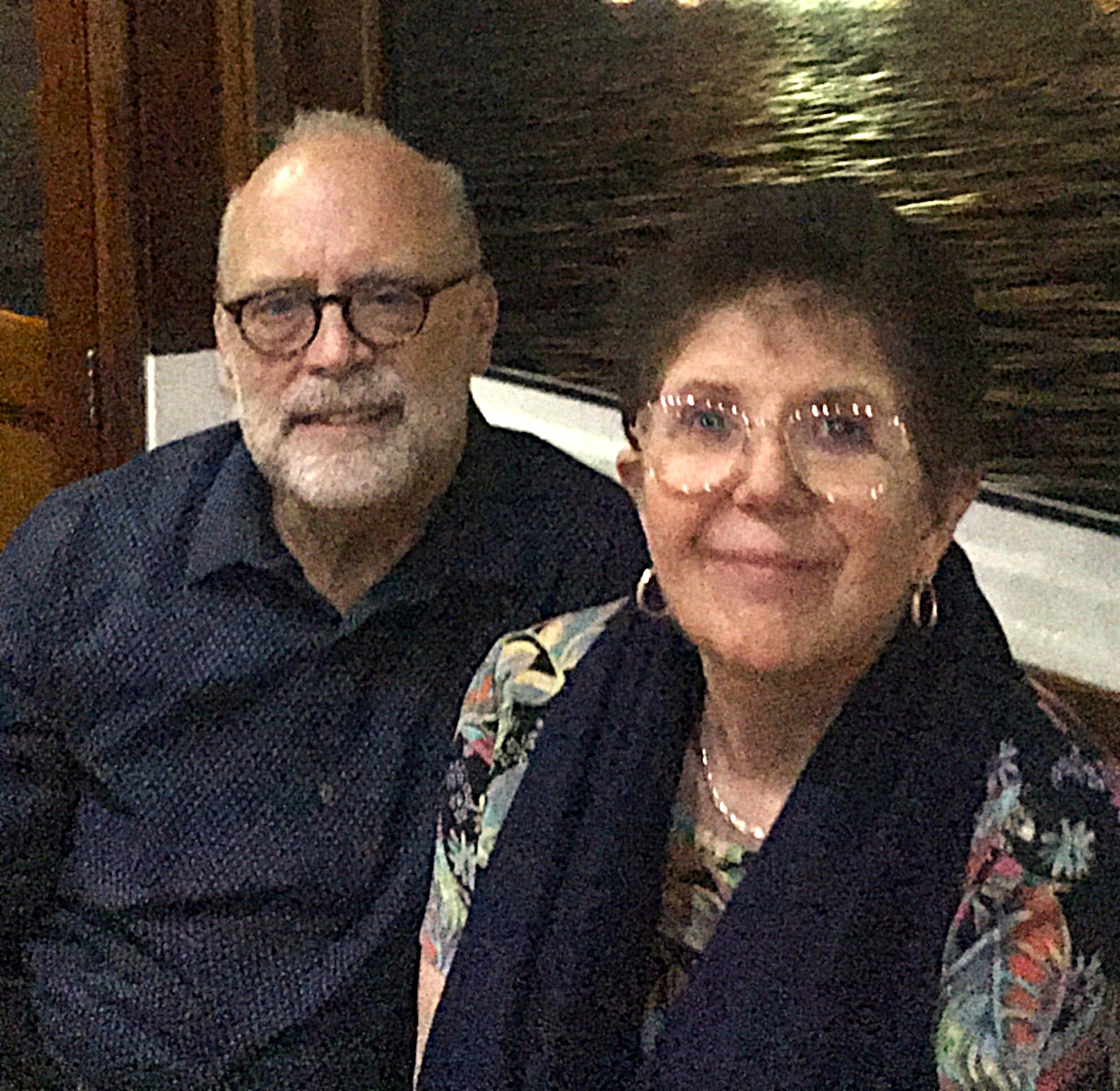
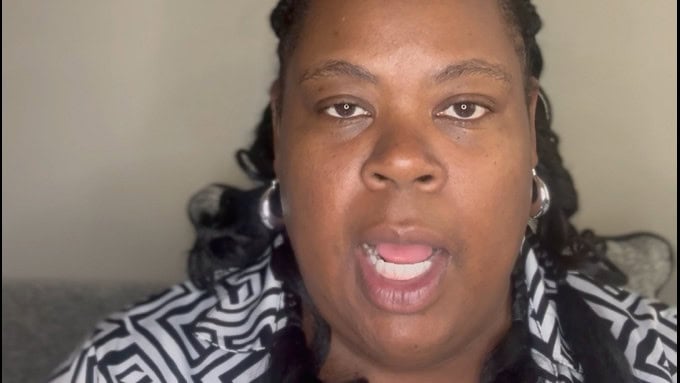
Sitting beside Bobbie, Bruce talks through what caregiving has actually asked of him: the exhaustion of a 24/7 role, the questions he’s had to sit with about his own limits, and the gratitude he’s found on the other side of it.
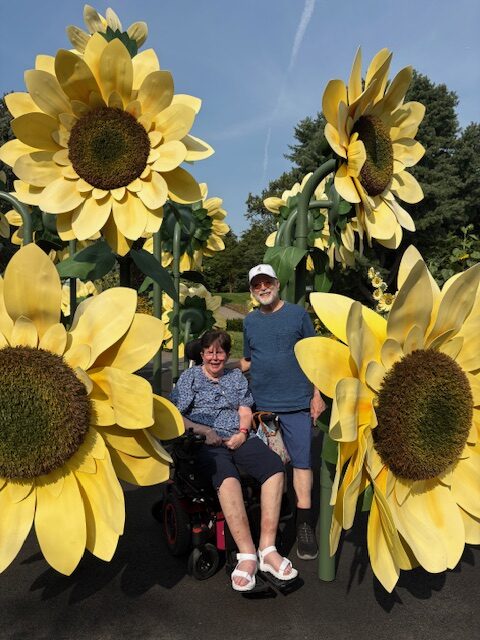
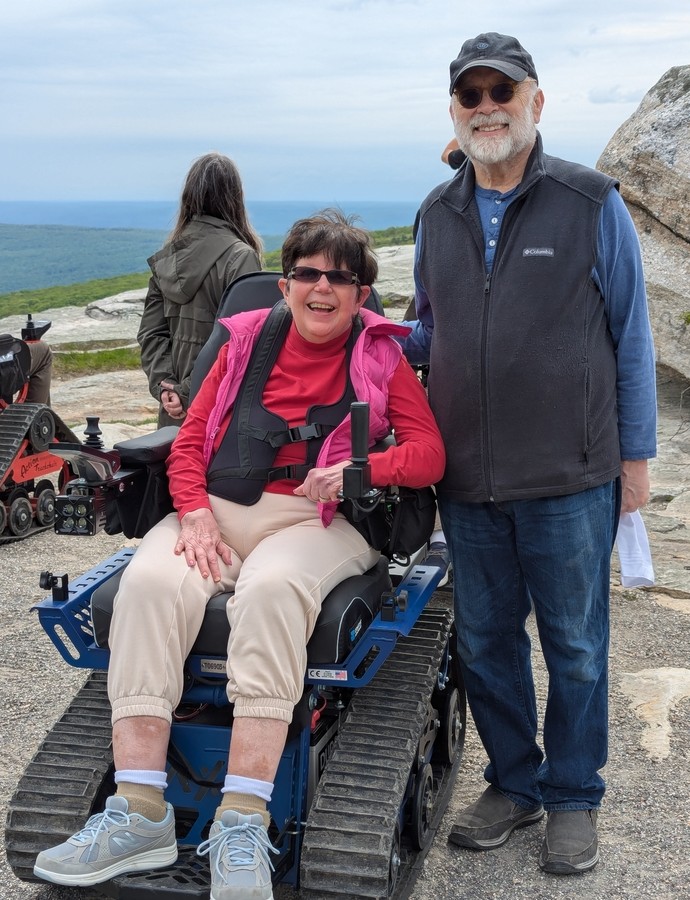
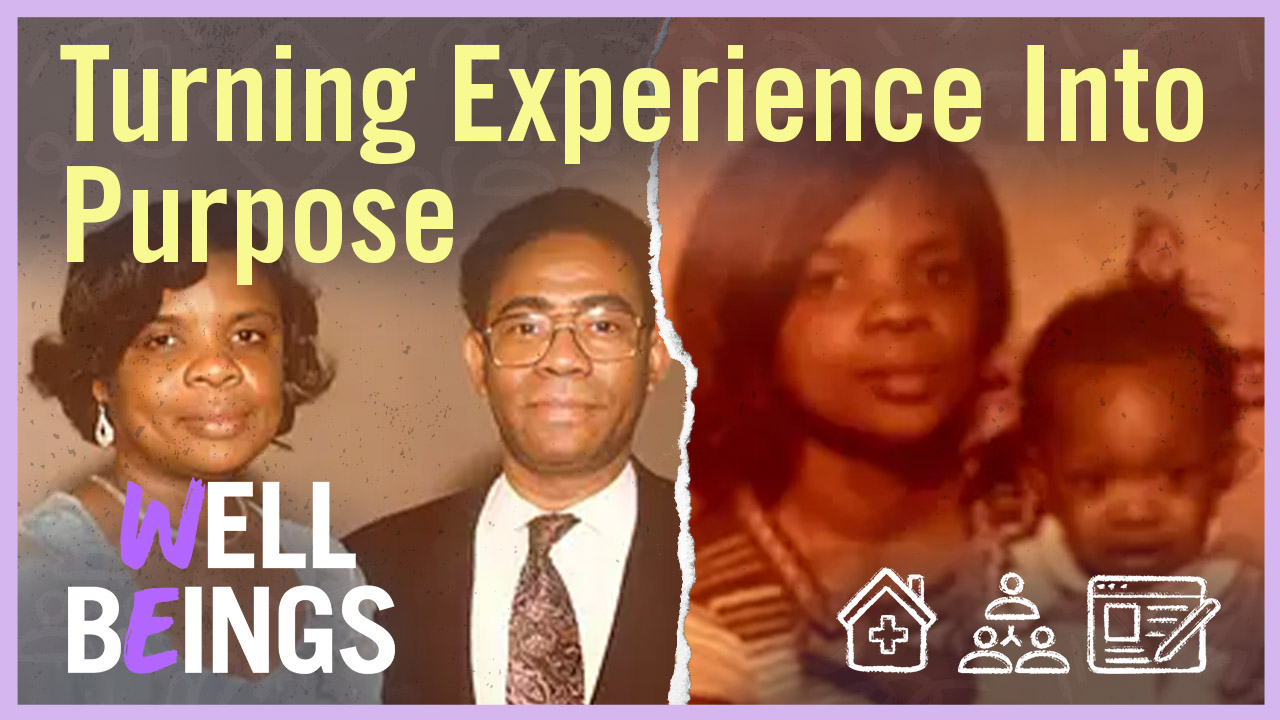
Bruce Makous grew up outside Philadelphia, the son of a cardiologist and a former nurse who raised ten children. He enrolled at Oberlin College intending to follow his father into medicine, then left the pre-med track behind for literature, theatre, and creative writing. He was a struggling actor in New York City when he met Bobbie, a photographer and writer with the same dark sense of humor. They fell in love, married, and built a life together that has now spanned 45 years, most of them with Bruce as Bobbie’s caregiver.
Bruce spent his career as a fundraiser in theater administration before retiring. He and Bobbie now live in New York’s Hudson Valley, where their days follow the rhythm captured in the excerpt above: routines, small jokes, and a devotion that has outlasted every diagnosis. Bobbie was diagnosed with multiple sclerosis 53 years ago, and a stroke three years ago left her paraplegic and living with dementia. Never Giving Up, his upcoming memoir, is his account of what he’s learned along the way. For more, visit his Substack, Caring for Bobbie.
Use #WellBeings and #ShareYourCaregivingStory on your social media posts to share your story.
Or DM your story to us on these social media platforms:
Send your story directly to us bit.ly/WellBeingsStoryWallSub.
Or Email us content to info@wellbeings.org.
Support for Caregiving is Provided By

















Outreach and Engagement Partners for Caregiving:

















WellBeings.org is a health and wellness resource, not a crisis or suicide response website. If you are in crisis, or experiencing thoughts of suicide, please call or text the 988 Suicide & Crisis Lifeline at 988 or the LGBT National Hotline at (888) 843-4564. The service is free and available 24 hours a day, seven days a week.
The monthly newsletter sounds like a useful way to keep up with upcoming events, timely resources, and new health information. I also appreciate that Well Beings combines broadcast content with local engagement to address critical health needs in communities.
Turn 30 FPS Into 60 FPS With One Click https://losslessscalings.pages.dev