Blog Post
Aug. 25, 2025 by Wes Kilgore, Well Beings and Forbes Contributor

Discussions about end-of-life care in America are often met with silence, confusion or fear. Yet millions of families face it every year, often without the support, clarity, or resources they need. Tom Koutsoumpas, CEO and founder of the National Partnership for Healthcare and Hospice Innovation (NPHI), argues that it’s time we redefine hospice not as a last resort, but as a profound opportunity for quality, dignified living until the end.
As a stage 3 melanoma survivor, Koutsoumpas understands how deeply caregiving can touch our lives. “I’m lucky to be here… It’s long been part of the very core function of hospice care to make sure that a caregiver was recognized as an important part of the team,” he says.
Koutsoumpas believes hospice can be a transformative force for families and caregivers, but first, the myths about it need to be addressed.

“One of the myths is that you have to be imminently dying,” he explains. “You don’t. You have to be terminal, and you have to have a six-month prognosis based on the general overall judgment of the physician. But it’s not a steadfast rule that you’re in continued decline or that you’re about to die.”
Instead, Koutsoumpas says, hospice’s role should be expansive. The goal, he emphasizes, “is to make sure that patients and their families live to the fullest until the very end of life.” That might mean savoring family dinners, laughter with grandchildren, or peaceful moments at home. “If a patient could have dinner, could be interactive with their family… right up to the very end of life. Then that means we were successful in caring for them.”

Hospice operation is evolving. “We want to make sure that we can use the latest tools of technology and support to care for our patients and families,” says Koutsoumpas.
The adoption of telemedicine in palliative care accelerated because of the pandemic. Telepalliative services such as remote consultations with clinicians have become invaluable, especially for symptom management and emotional support at home. Patients with mobility issues or in rural areas also benefit from such flexibility, helping extend care to underserved populations. A cost-focused study of TeleHospice found that combining virtual and in-person visits could reduce staff travel expenses by over $115,000 annually.
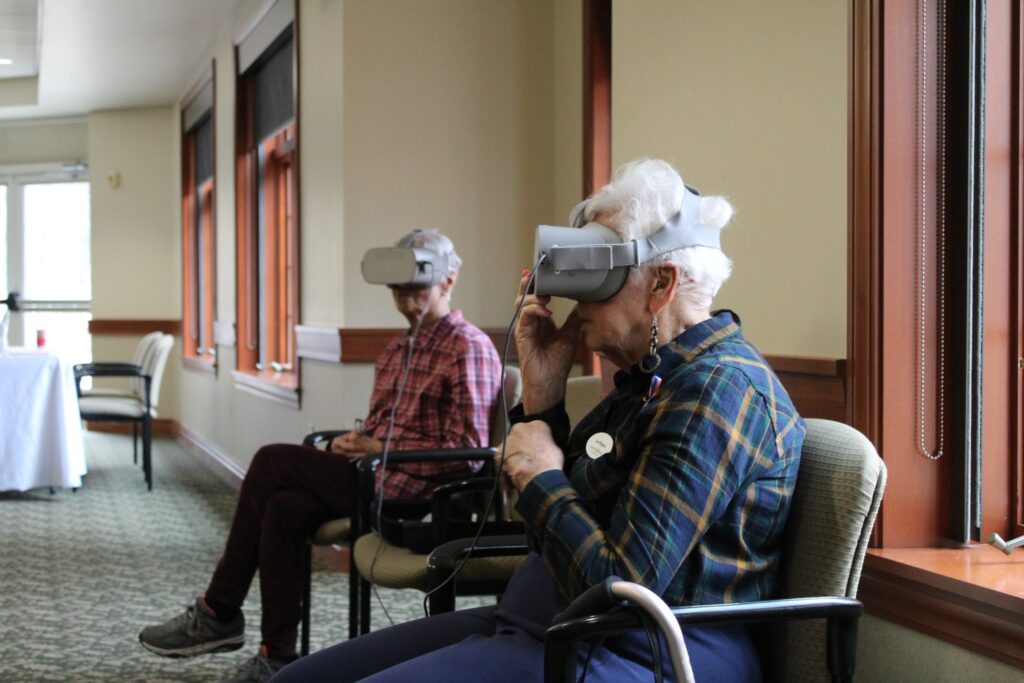
Beyond telehealth, specialized innovations are making their mark. One such example: robotic companion pets. Though still emerging, research indicates these devices may offer emotional benefits, reducing loneliness and agitation among hospice patients. “It’s a really wonderful tool that has changed their lives,” Koutsoumpas says.
A 2018 Cornell University study revealed that Black patients often face poorer experiences in hospice care compared to white patients, not necessarily because of different medical conditions, but because of a breakdown in trust and communication.
Systems that provide comprehensive support regardless of a patient’s financial or housing situation are vital. NPHI represents more than 120 programs across 39 states, and it operates a national helpline, 844-GET-NPHI, where families can get help navigating palliative care options. They’ve also developed free caregiver guides in partnership with organizations like the American Cancer Society. These cover advanced caregiving for cancer, palliative care, cardiac, dementia, lung, veterans’ needs, and soon, pediatric care.
“We care for patients, for people without regard to their ability to pay. It doesn’t matter if they can afford it or not, we accept everybody,” Koutsoumpas says.
Tom Koutsoumpas’ insights are indicative of a growing movement in hospice care: one that prioritizes early referral, equality of access and compassionate, tech-informed support. His calls for dispelling myths, innovating care delivery, and addressing inequity align with policy discussions and reforms throughout the field of palliative care.
As he puts it, hospice should not be seen as surrender; it should be seen as support, as life-affirming. “The goal of hospice is to make sure that patients and their families live to the fullest until the very end of life.”

Wes Kilgore is a writer, musician and bon vivant based in the Washington, DC area, and the proud parent of two disturbingly well-adjusted young women and two borderline sociopathic Corgis.
Blog Post
Blog Post
Blog Post
podcast
WellBeings.org is a health and wellness resource, not a crisis or suicide response website. If you are in crisis, or experiencing thoughts of suicide, please call or text the 988 Suicide & Crisis Lifeline at 988 or the LGBT National Hotline at (888) 843-4564. The service is free and available 24 hours a day, seven days a week.
This article beautifully challenges the stigma around hospice, highlighting it as a vital, quality-focused support system. The emphasis on innovation, like telehealth and companion pets, is inspiring, and the call for equity is deeply moving. It’s a hopeful, necessary perspective on end-of-life care. SerieA
This piece truly changed how I view hospice care. The idea of seeing it not as a last resort but as a chance for meaningful, quality time until the end is so powerful. Koutsoumpas’ personal experience and the focus on caregiver support make it relatable. I especially loved learning about telehealth and robotic pets—they’re such innovative ways to improve comfort and reduce loneliness. The point about equity is critical; it’s disheartening that trust gaps lead to poorer experiences for Black patients. NPHI’s efforts to provide resources and support for all families, regardless of finances, are commendable. This article beautifully humanizes end-of-life care, emphasizing compassion and dignity. It’s a message we need more of.
This piece truly changed how I view hospice care. I never realized how many misconceptions cloud its actual purpose—providing quality, dignified living, not just a last resort. Koutsoumpas’ emphasis on caregivers as essential team members and the innovative uses of technology like telehealth and robotic pets are incredibly heartening. It’s refreshing to see organizations like NPHI actively working to break down barriers and ensure equitable access for all, regardless of financial status. The stories of YoloCares and Emmanuel Hospice show that this model of compassionate, tech-informed care can make a profound difference. Let’s challenge the stigma and recognize hospice as a life-affirming choice, not a sign of surrender.英国区苹果AppleID独享
This article on hospice care is refreshingly optimistic! Who knew being at the end of life could involve virtual consultations, robotic pets, and ensuring family dinners arent missed? Koutsoumpas has the right idea – lets stop thinking of hospice as a sad last stop and more like a high-tech, high-quality pit stop for lifes final leg. The tech angle, especially telehealth, is brilliant for avoiding staff travel and helping folks in the sticks. And giving caregivers guides? Smart! Though I suspect my Corgi might have mixed feelings about a robotic pet vying for her attention. The push for equity is also crucial; no one should face poor care because of their background. Lets embrace this redefinition and make the end of life less of a buzzkill and more of a supported, tech-enhanced adventure!Nano Banana free
Haha, so redefining hospice as a profound opportunity for quality, dignified living until the end is definitely a shift! Who knew savoring family dinners could be a revolutionary concept? And using telehealth to save $115,000 a year? Talk about a smart solution! Though, Im a little skeptical about robotic companion pets solving everything, but hey, if it reduces loneliness, maybe we should embrace the high-tech furball! Koutsoumpas is right, its about support, not surrender. Just dont tell my cat hes part of the caregiving team, hell think hes getting promoted! #HospiceInnovation #TechPets #CaregiverLifeNano Banana free
This piece on redefining hospice as life-affirming support is a breath of fresh air, or perhaps oxygen mask, considering the topic! Who knew discussing end-of-life care could be so uplifting? Koutsoumpas take on busting myths – like you *dont* have to be dying *imminently* (unless your doctor says so, which is like saying the sky is blue) – is spot on. Who has time for death when you can enjoy family dinners and VR experiences? The push for tech like telehealth and robotic pets is brilliant; finally, hospice gets its own version of The Jetsons. And the commitment to equity? Well, thats the cherry on top of the late-life sundae. Lets face it, if more care was this high-tech, high-touch, and accepting, maybe fewer people would need it in the first place!MIM
This piece on redefining hospice as a profound opportunity rather than a last resort is a breath of fresh air, albeit slightly less zesty than a bike ride with YoloCares! Koutsoumpas nails it – who wants to be seen as a dying relic when you can still enjoy family dinners (or at least the anticipation of them)? Quashing the myth of imminence is key, though perhaps the medical community needs a gentle nudge, like a virtual consultation reminder. The tech angle, especially telehealth and robotic pets, is brilliant – finally, a way for clinicians to reduce travel costs and maybe combat patient loneliness without leaving their comfy chairs! The call for equity is heartening, though ensuring trust isnt broken seems like a prerequisite for even the best tech innovation. Overall, a hopeful perspective, unless youre the Corgi, then its probably just another day. đồng hồ online
Thank you, SerieA, I’m glad that you found it informative. If you have experience with hospice or caregiving, and you’d like to share your story, please do so here https://wellbeings.org/get-involved/
Thanks for the feedback, đồng hồ. The reframing of hospice was a revelation to me. And actually, one of my Corgis is kind of in a hospice situation himself. 19 years old, and almost completely deaf and blind, and unable to stand up on his own now. But he’s lying in the front yard right now, soaking in as much of this beautiful day as possible.
Haha, who knew discussing robotic companion pets could be so heartwarming and, frankly, life-affirming? Koutsoumpas has it right – lets ditch the imminent death myth and embrace hospice as the high-tech, high-touch support system it should be! Those telehealth visits saving $115k annually? Brilliant. And throwing virtual reality into the mix? Now *that’s* innovative end-of-life care I can get behind. Plus, the fact that everyone is welcome is just the kind of support we all need, regardless of our ability to pay (or maybe *because* we cant). Lets redefine this conversation before were all too old to ride bikes – or interact with grandkids – right up to the very end. More tech, more support, less stigma!grow a garden calculator