Letting Go Explores the Fertility Challenges Black Women Often Endure
A short animated documentary about infertility, faith, hope, and the power of community.
Letting Go

About the film
Letting Go tells the story of Kori, a single queer Black woman navigating her fertility journey and learning to let go of the timeline she imagined for her life.
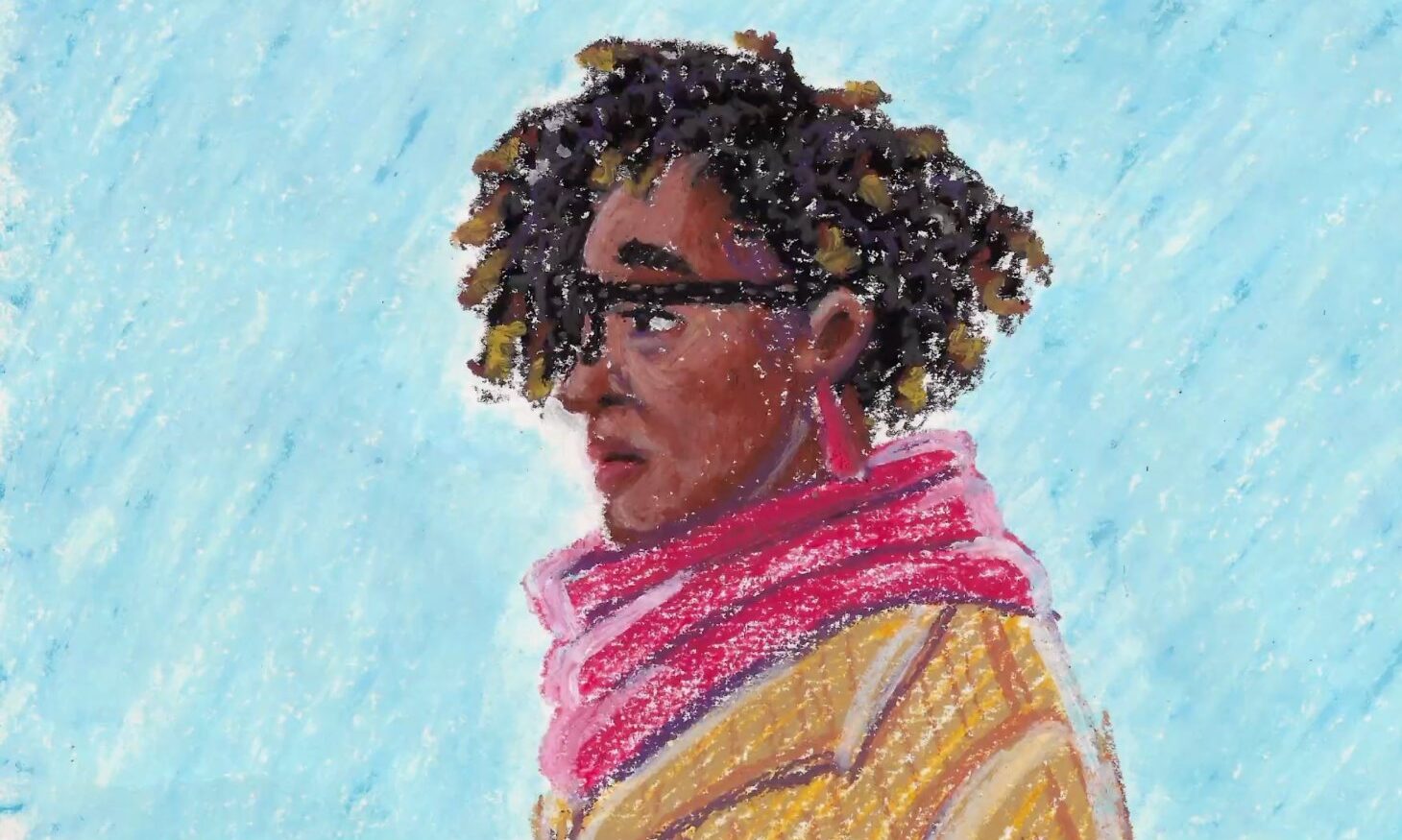
The film was inspired by the experiences of a participant in Morehouse School of Medicine’s Fertility Equity Study, and it was released during Black (In)Fertility Awareness Week. Through storytelling, its creators aim to build empathy, challenge stigma, and create spaces where Black people and other people of color feel seen, supported, and less alone on their family-building journeys.
Kori describes a process that people around her support, and that she still mostly moves through by herself: early appointments, nightly injections, a procedure with no one beside her. She also talks about what it is like to look for her own story in a field that rarely shows it.
“If I had to leave one point of sage advice, it would be to let go of the timeline.” Kori, in Letting Go
Share it with someone
If this film resonates with you, consider sharing it with someone who may find comfort, connection, or hope in Kori’s story.
About the filmmaker
Reniqua Allen-Lamphere is a journalist, author, and filmmaker who tells stories at the intersection of race, culture, health, and history. She founded Oshun Griot after her own experience with IVF and years inside a fertility system she says was not built for her. Her reporting has appeared in The New York Times, The Washington Post, and The Guardian, and she has produced for PBS.
Resources
- The Fertility Equity Study Morehouse School of Medicine’s Center for Maternal Health Equity studies Black women’s experiences with infertility and fertility care. The film was inspired by a participant in this study.
- Infertility and fertility: NICHD Plain-language information on causes, diagnosis, and treatment from the Eunice Kennedy Shriver National Institute of Child Health and Human Development.
- Infertility: CDC Basics on infertility and assisted reproductive technology, including what to expect when you see a specialist.
- Infertility: Office on Women’s Health An overview of infertility for women from the U.S. Department of Health and Human Services.
- 988 Suicide & Crisis Lifeline Free, confidential support for anyone in emotional distress. Call or text 988, any time.
Read the transcript
I learned very recently, maybe in the last two years, that community is important to me, that it’s important to have people that I’m grounded by, people that are confidants, people that I can be silly with, people that I can be my whole authentic self with. And the truth is, up until maybe 33, that wasn’t a part of my life. It’s important to distinguish being lonely versus being alone. I’m not lonely. I have people, and people support me, but I am actually alone.
My fertility journey technically started when I was 9 years old, which is when I had my first menses. I’ve been out as a lesbian since I was 15, so there was always this expectation that I wouldn’t have children, so it didn’t matter. Though I have always wanted to have children.
I was 27, and my primary care physician asked me when the last time I had a period was, and I very inconsequentially said, “Oh, like a year and a half ago.” She immediately said I needed to start seeing a gynecologist, and she was actually the person who diagnosed me with polycystic ovarian syndrome. It was at that time that I got the jarring number that I had a 21% chance of having children without assistance. My response at that time was, “I don’t understand what that means.”
Fertility is cost prohibitive. I couldn’t afford it. When the doctor mentioned to me that fertility benefits were covered under my insurance, that’s what made me look into it. That was 34.
On its onset, it’s been a bit of a lonely process. It has been sterile at best, inconsiderate in reality. It’s a lot of hurry up and wait. When I go to those appointments at 6:30 in the morning, I am by myself. When I’m injecting myself at night, I am by myself. When my anxiety is getting the best of me and I’m pregnancy testing myself every day because I’m scared, I am by myself. The process of having to find someone to inject the medicine for me is such an emotional strain. Like, you know, I’m flexible, but I’m not that flexible.
It’s this very weird juxtaposition to hold where I do feel like I have a supportive group of people, but 90% of this I do actually do alone. I had an issue where my cohort mate, who’s a good friend, was supposed to go to my egg retrieval with me, but she was on a trip. And so, at the last minute, I had to find someone else. I was sitting on my floor crying, “How are you going to have a baby by yourself? You can’t even get somebody to go to the procedure with you.”
I found out that my third IUI failed the day before my 35th birthday. I realized I was holding all that grief by myself. And so, I completely exploded. It took me six months in a fit of tears and anger to finally admit, like, “I hate this. I don’t like this process.”
There apparently was an incorrect code in my file, and the nurse who called me kept saying things like, “Go ahead and try to have a fun time at home.” And I finally called her on it, and her response was, “Oh, they didn’t put that you were a lesbian by yourself in your file.” And I was just like, “Wait, what the [expletive] is that? Like, what do you mean by that?”
There’s no space for women of color. There is no space for Black women. The way that IVF has been marketed is that it’s a white woman’s issue or it’s a queer woman’s issue. And all the queer women happen to be white, right? And so, no matter what, it ends up being a white woman issue. There is no Black, single, and trying to be a mommy. I have not found that.
There’s one woman that I do actually talk to in depth about the process. She’s an immigrant. She’s Black. She was older and she was single. She is the first person that has had all the same intersections as me. I am the only person that I know personally, other than this woman, that has gone through this alone.
I’ve thought about giving up so many times. Things started feeling better to me when I finally just surrendered to the process. There’s nothing I can do. My body is only going to do what it’s going to do. And I have to deal with that until I get to the next step.
If I had to leave one point of sage advice, it would be to let go of the timeline. It doesn’t exist. It’s not real. And if you bind yourself to it, that is exactly what it will become, a bind.